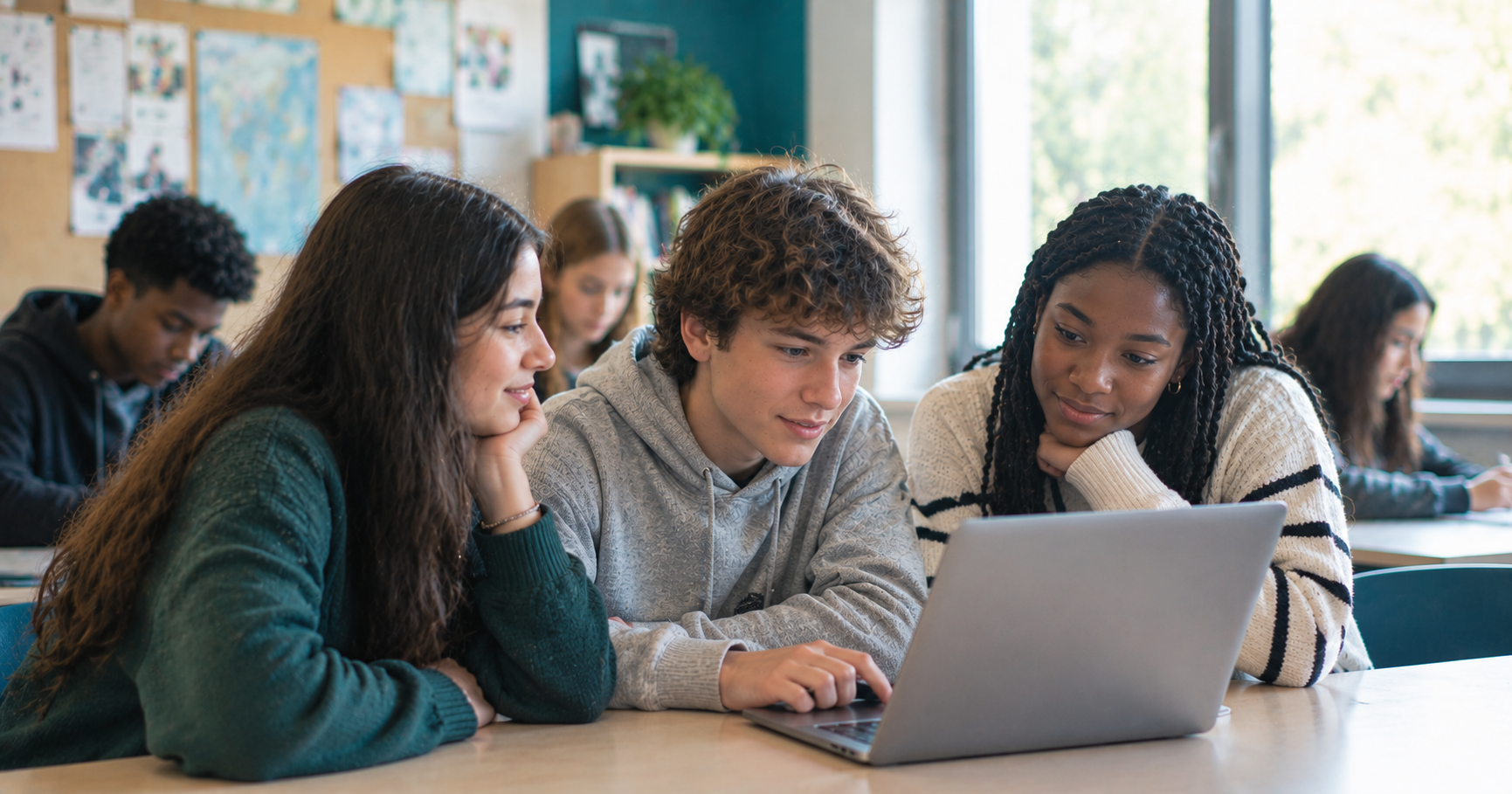
Imagine a student in your class. They may not be on social media, but they might be turning to a chatbot to process their anxieties or find the right words to describe a personal struggle. It’s easy, private, and always available. It feels like a safe, judgment-free space.
It’s a powerful tool, but it’s also a new frontier for educators. While some fear that AI will erode the human element in education, the reality is more nuanced. It’s not about making teachers obsolete. Instead, it’s a call for us to evolve. Our role is shifting from being mere content-deliverers and rule-enforcers to becoming Digital Life Coaches. Our primary task is to teach the “unseen lesson”, not just how to use AI, but when to trust it, when to question it, and, most crucially, when to step away and engage with a real human being.
This article discusses AI-based chatbots in the broad sense, generative tools that produce responses by predicting patterns in language. SAFEBOT works differently. It is an educational chatbot built on predefined, validated pedagogical content rather than generative AI. Its responses are grounded in carefully designed and reviewed material, not generated on the fly. This distinction matters: while the skepticism and digital boundaries described here apply to generative chatbots, SAFEBOT is designed to support the same “unseen lesson”, helping students use technology thoughtfully, reflectively, and in connection with real human guidance.
The Core Challenge: Navigating the “Line”
One of the most significant challenges for educators is the pervasive confusion over acceptable AI use. A recent study found that over half of the people interviewed felt they were playing a “guessing game” when trying to determine if using a chatbot was appropriate. One teacher aptly described the situation as an “absurd line.”
This ambiguity is a source of stress for teachers. We are put in the position of enforcing rules that feel vague and poorly defined. Our job, therefore, isn’t to be the AI police. It’s to initiate an open, honest dialogue about what constitutes a healthy relationship with these tools. Rather than providing a rigid rulebook, we should guide students in establishing their own personal “digital boundaries” based on a sound understanding of the technology and its limitations.
The Skill of Skepticism: A Chatbot is Not a Friend
A core component of this “unseen lesson” is helping students develop a critical eye. We must teach them to distinguish between a bot that sounds empathetic and a human who genuinely cares.
Chatbots are designed to be engaging and validating, which can be especially appealing to young people. However, it’s critical to remember they are not your friends. They are large language models, sophisticated pattern-matching engines that are exceptionally good at imitating human speech. It’s easy for students to forget this, especially when the bot seems to “get” them.
This is where we, as teachers, can intervene. We can foster a spirit of curiosity and inquiry. Encourage students to ask themselves these questions when they receive a suggestion from a chatbot:
- Why did it say that?
- What data or patterns might have led to this response?
- Where did this information come from?
- Can I verify it independently?
- Is this advice genuinely helpful for my unique situation, or does it sound generic and potentially universal?
Teaching students to treat AI not as an all-knowing oracle but as a puzzle to be solved is how we equip them with a robust “BS detector” for the digital age.
A Practical Tool: The “3-Question Rule”
- Ask the Bot. Use it for a quick brainstorm, to articulate a feeling, or to find preliminary language for what you’re experiencing.
- Check. Hit the Books (or Google). Encourage a quick fact-check. Does the advice or information provided by the bot have any scientific backing? Or does it sound like generic, feel-good platitudes?
- Connect. Ask a Human. Take the insights gained from steps 1 and 2 and discuss them with a trusted friend, parent, or teacher.
This rule turns the bot’s weaknesses into a strength. When a chatbot gives a vague or impersonal response to a personal problem, it serves as a clear signal to seek out a real person. The bot becomes a valuable starting point, a launchpad, for a more meaningful, authentic conversation.
The Winning Combination: Teachers, Friends, and Digital Tools
Recent research is beginning to show that it’s not a competition between teachers and AI; they are more effective as a team. Studies indicate that when teachers are engaged, responsible, and actively help students navigate AI tools, it significantly boosts student well-being. This positive effect is further amplified when students have solid friendships to rely on.
The winning combination, therefore, is a supportive educational ecosystem: caring teachers, good friends, and smart AI tools. AI is a powerful assistant, but it simply cannot replicate the unique, complex, and immensely valuable power of real human connection.
The Ultimate Goal: Raising Skeptics, Not Zombies
Our goal as educators is not to raise a generation that is lost without a chatbot. It is to raise a generation that can use these tools intelligently, ethically, and with a healthy dose of skepticism.
Think of an AI wellbeing tool as a “canary in the coal mine”. It can provide some initial support and help a student find the words to ask for help from a human. The real key, however, is to give students experience using it and then to guide them in reflecting on that experience.
If a student leaves our classroom believing the chatbot is the ultimate source of wisdom, we have failed in our duty. But if they leave as a skeptic, if they look at its advice and think, “Hmm, that’s a bit shallow. I need to talk to a friend about this”, then we have succeeded. Our most important role is to consistently remind them that the most significant, challenging, and rewarding conversations are the ones we have face-to-face, without a safety net of code.
References
Futterer, T., Fischer, C., Alekseeva, A., Chen, X., & Gasevic, D. (2025). Student and teacher perspectives on AI use in higher education: A qualitative study on boundary negotiation. Computers and Education: Artificial Intelligence, 8, 100345.
Kuhail, M. A., Alturki, N., Alramlawi, S., & Alhejori, K. (2023). Interacting with educational chatbots: A systematic review. Education and Information Technologies, 28(1), 973–1018.
Zhang, J., Chen, Z., & Li, Y. (2025). The interplay of teacher responsibility, AI integration, and peer collaboration in promoting student well-being. Frontiers in Psychology, 16, 1526789.
Zhao, L., Wang, H., & Liu, S. (2025). Teacher-student relationships and AI integration: Differential effects on emotional health in digital classrooms. Journal of Educational Technology & Society, 28(2), 45–59.