Why boys’ mental health deserves attention
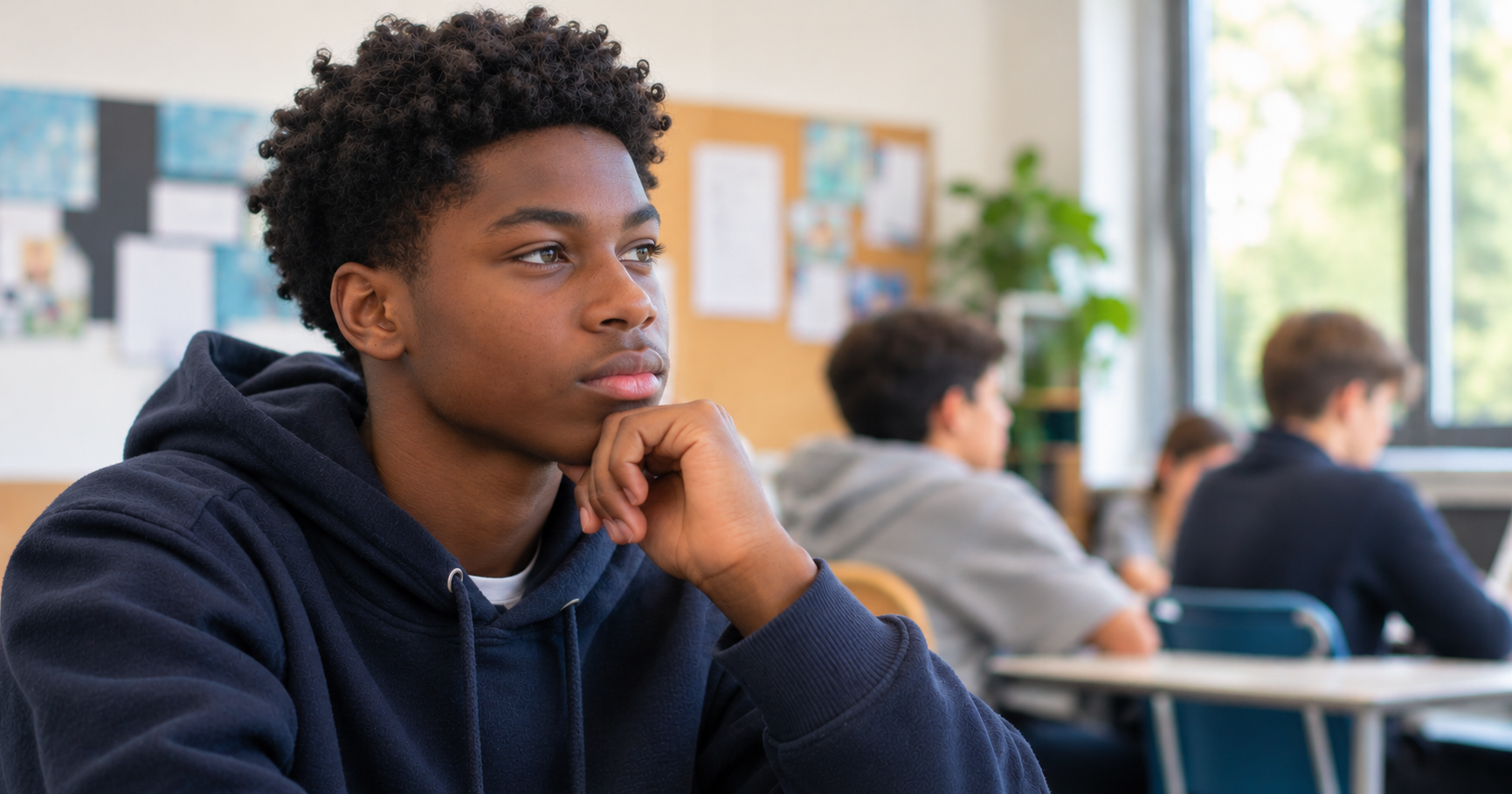
Understanding mental health requires attention to how different groups experience distress, express difficulties and access support. Rather than assuming that all students have the same needs, education professionals need to ask questions and listen.
World Health Organization estimates published in 2025, referring to 2021, show that the global age-standardised suicide rate was more than twice as high among males as females: 12.3 compared with 5.6 deaths per 100,000. Eurostat (2026) reports that men accounted for 76.4% of the 48,370 suicide deaths recorded in the EU in 2023. These figures cover all age groups, not boys alone, and do not explain individual experiences. They nevertheless underline the importance of understanding barriers to support.
Research suggests that conformity to traditional masculine norms can influence how men experience and express distress and whether they seek help (Seidler et al., 2016). This does not mean that all boys respond in the same way. It means that gender expectations can shape what they feel able to express and whether asking for support seems acceptable.
How gender expectations can discourage help-seeking
Messages such as “Boys don’t cry” or “Man up” suggest that boys should be strong, independent and emotionally controlled. Strength and independence are not problems in themselves; difficulties arise when they mean never showing vulnerability or always coping alone. Asking for help may then feel embarrassing, threaten a boy’s sense of independence or expose him to judgement.
These expectations are learned through relationships, cultural messages and everyday interactions, especially during childhood and adolescence. They are neither inevitable nor the only ways of being a boy. Schools can challenge restrictive norms without stigmatising masculinity, making room for different expressions of emotion and ways of seeking support.
Beyond gender: recognising distress and trusting support
Barriers also include difficulty recognising distress, uncertainty about available services and concerns about privacy or negative reactions. Some boys may express difficulties through irritability, withdrawal, alcohol use or changes in behaviour rather than explicitly describing sadness or anxiety. These signs are not specific to boys and do not establish a diagnosis. Focusing only on behaviour, however, can obscure the difficulties behind it.
Young people may struggle to name their experiences, judge when support is needed or trust that adults will understand. Friends, family and teachers may be accessible, but a relationship does not automatically feel safe. The challenge is therefore not simply to “get boys to talk”, but to create conditions in which they can recognise distress, communicate their needs and obtain appropriate help (Sheikh et al., 2025).
How education professionals can support help-seeking
Help-seeking should be a familiar, practical and accepted part of school life. The following approaches bring together everyday educational practice and clear routes to support.
1. Question restrictive gender norms. Discuss expectations such as “boys must always be strong” or “boys should solve problems alone” and explore their effects on well-being. Avoid assuming that all boys share these beliefs or that masculinity itself is harmful. Make space for vulnerability, care and different ways of being a boy.
2. Reframe help-seeking without making it another test. Recognising difficulty and accepting support can be discussed as expressions of courage and responsibility. However, boys should not have to prove their strength to deserve help: needing support is sufficient.
3. Make mental health part of everyday learning. Include age-appropriate conversations about emotions, stress and well-being in routine activities, rather than addressing them only during crises. These discussions should be relevant to all students, not presented as a concern affecting boys alone.
4. Build emotional literacy and explain available support. Help students identify emotions and notice persistent changes in mood, anxiety, withdrawal or irritability, without encouraging self-diagnosis or the diagnosis of peers. Explain who can help within and outside school and how to contact them.
5. Use relatable and diverse role models. Share stories of boys and men who have experienced difficulties and sought support. Include different ages, backgrounds and experiences, while avoiding the suggestion that one story represents everyone or that all students should seek help in the same way.
6. Provide practical, accessible information. Use contact cards, posters, illustrated stories or QR codes to answer four questions: Who can I talk to? Where can I go? How can I start the conversation? What happens next? Ensure that language and formats reflect different identities, cultural backgrounds and support needs.
7. Offer low-pressure ways to practise asking for help. Use hypothetical scenarios, anonymous questions and conversation starters without requiring personal disclosure. Students might practise saying: “I haven’t been feeling like myself lately. Could we talk?” Offer one-to-one conversations where possible; access to support should not depend on speaking in front of peers.
8. Act as a bridge to appropriate care. Listen respectfully, take concerns seriously and explain confidentiality and its limits. Discuss next steps with the student wherever possible and follow safeguarding and referral procedures. Education professionals should not diagnose conditions, and peers should not be expected to assess risk or manage another student’s distress alone.
9. Involve students in designing school initiatives. Evaluation should consider not only attitudes but also whether students know whom to approach, understand how to access help and can obtain it when needed.
Making well-being a whole-school priority
Education professionals are not expected to replace specialist care. Their role is to create safe, inclusive learning environments that help students recognise distress, communicate their needs and access appropriate support. This includes understanding how gender expectations may influence boys’ responses to emotional difficulties.
Everyday interactions matter. Adults can reinforce the idea that boys must cope alone, or show through respectful responses that vulnerability and asking for help are acceptable. Support must also be understandable, welcoming and trustworthy, with clear information about access, privacy and what happens next.
This work cannot depend on individual teachers or isolated activities. School policies, routines and relationships should place social and emotional well-being at the centre of educational priorities, supported by collaboration across the school community and links with appropriate services. A whole-school approach connects mental health promotion with efforts to challenge restrictive gender stereotypes (Keating & Baker, 2025).
Creating these conditions means more than responding when distress becomes visible. It means making inclusion, well-being and access to support an integral part of school life, central to the aims of the SAFEBOT project.
References
Eurostat. (2026, September 9). Deaths by suicide in the EU: A slight decline in 2023. https://ec.europa.eu/eurostat/web/products-eurostat-news/w/edn-20260909-1
Keating, S., & Baker, C. R. (2025). Gender equality matters: A precious “GEM” to tackle gender inequality through a whole-school community educational programme. Educational Review, 77(3), 710–730. https://doi.org/10.1080/00131911.2023.2224939
Seidler, Z. E., Dawes, A. J., Rice, S. M., Oliffe, J. L., & Dhillon, H. M. (2016). The role of masculinity in men’s help-seeking for depression: A systematic review. Clinical Psychology Review, 49, 106–118. https://doi.org/10.1016/j.cpr.2016.09.002
Sheikh, A., Payne-Cook, C., Lisk, S., Carter, B., & Brown, J. S. L. (2025). Why do young men not seek help for affective mental health issues? A systematic review of perceived barriers and facilitators among adolescent boys and young men. European Child & Adolescent Psychiatry, 34(2), 565–583. https://doi.org/10.1007/s00787-024-02520-9
World Health Organisation. (2025). Suicide worldwide in 2021: Global health estimates. https://www.who.int/publications/i/item/9789240110069