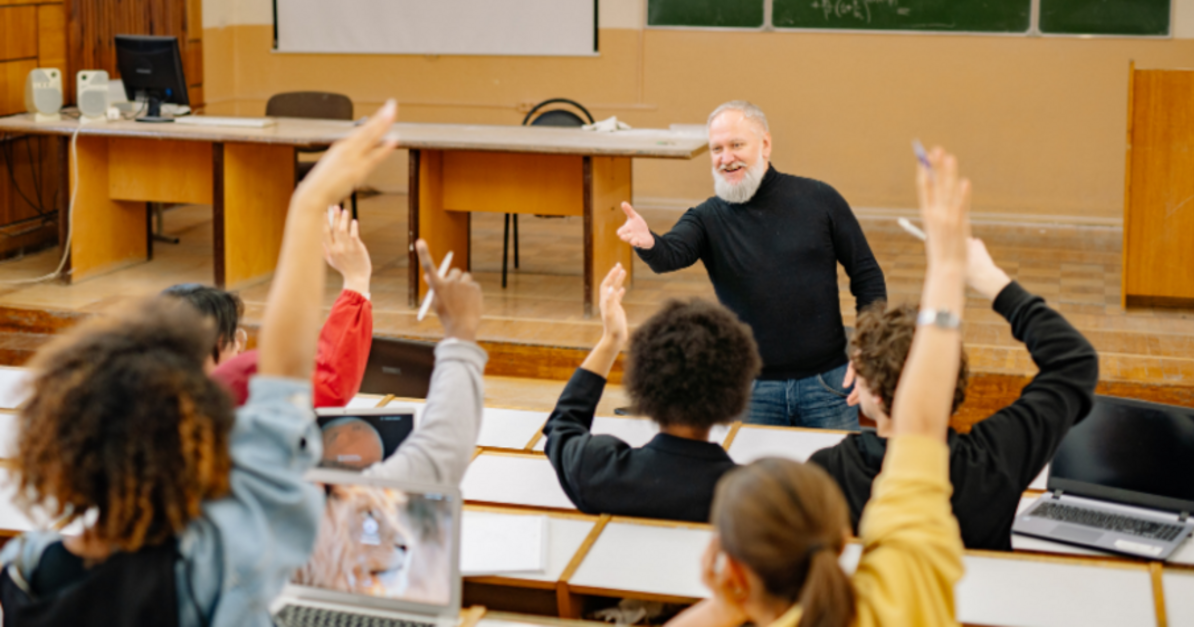
Every day, students walk into classrooms carrying far more than their schoolbags. They bring worries, hopes, anxieties, and emotions that don’t simply disappear when a lesson begins. In fact, how they feel shapes how, and whether, they learn at all.
The SafeBot project is built on the belief that schools should be safe spaces for everyone, and that emotional education is not an isolated activity but an integral part of school culture. Understanding the teacher’s role in student well-being, and acting on it, is at the heart of the project.
What do we mean by well-being at school?
Well-being is not simply the absence of stress or illness. According to the European Education Area (2026), well-being at school means actively and meaningfully engaging in academic and social activities, having a positive sense of identity, feeling safe, valued and respected, and experiencing a sense of belonging to one’s classroom and school community. It is a dynamic state in which students are able to realise their potential, develop their capacities, and cope with the everyday challenges of learning and growing up. It is multidimensional (emotional, social, physical, and cognitive) and fluctuates daily depending on whether students’ core psychological needs are being met (Zheng, 2022).
The teacher as a key actor
It is sometimes assumed that academic performance and emotional health are separate concerns. Research consistently tells us otherwise. The interpersonal behaviour of teachers (how they relate to students, how they communicate, how they respond to emotions) has a direct influence on students’ motivation, engagement, and well-being (Zheng, 2022). Students who feel cared for by their teachers are more likely to take risks in their learning, develop resilience in the face of difficulty, and maintain positive attitudes towards school.
This relationship is grounded in well-established psychological theory. Attachment theory highlights the importance of secure, trusting relationships as the foundation for learning: when the teacher-student relationship is characterised by warmth, openness, and low conflict, students gain a psychological anchor that supports their development across cognitive, social, and emotional domains. Self-Determination Theory adds another layer, identifying three core needs that teachers can help fulfil:
- relatedness (feeling connected to others),
- competence (feeling capable),
- and autonomy (feeling a sense of agency).
Educators who design their classrooms around these needs are not simply improving academic outcomes; they are actively building well-being (Zheng, 2022). Schmitz (2024) confirms that specific teacher behaviours and pedagogical approaches correlate with student well-being, including need-supportive teaching, positive teacher-student relationships, and a growth-oriented classroom culture. Importantly, he also notes that it is students’ own perception of teaching, not teachers’ self-reports, that most strongly predicts student well-being outcomes, a finding that underlines how much the lived experience of the classroom matters.
What teachers can do: from theory to practice
Knowing that teachers matter is only the beginning. The more pressing question is: what can teachers actually do, day by day, to make a difference?
Build genuine relationships. Trust is built through consistency, active listening, and genuine interest in students’ lives. Warmth and openness in the teacher-student relationship are the qualities most strongly linked to student well-being (Zheng, 2022).
Create safe, predictable environments. Clear routines and a culture where mistakes are treated as learning opportunities reduce anxiety and free up cognitive and emotional resources. Teachers who support students in making errors contribute meaningfully to their well-being (Schmitz, 2024).
Integrate emotional check-ins. Brief daily moments, mood meters, reflection prompts, open questions, normalise emotional awareness and help identify students who need support. Even a one-to-three-minute check-in can shift the emotional tone of a whole class (Euneos, 2026).
Weave social-emotional learning across subjects. Empathy, communication, and conflict resolution can be developed inside a literature discussion or a group project, not just in dedicated lessons (Euneos, 2026).
Model well-being. Teacher and student well-being are deeply connected. Educators who manage stress openly and set healthy boundaries teach students how to react when facing difficulties (Euneos, 2026).
The Whole-School Dimension
Teachers do not act in isolation. The European Education Area emphasises that well-being at school is most effectively supported through a whole-school approach, one that coordinates efforts across teachers of all subjects, school leadership, students, families, and external professionals. When well-being is embedded in school culture rather than delegated to a single counsellor or a single lesson, its effects become sustainable and systemic (Well-being at school, 2026).
This is precisely the approach SafeBot takes. Our project works to equip educators with innovative, inclusive methodologies for emotional education, to create safe and supportive learning environments, and to ensure that all students, regardless of background or need, have equal access to the emotional support they deserve. We also help young people critically assess the information about mental health found online, building the skills they need to distinguish what is helpful from what is harmful.
References
Euneos. (2026, April 1). How can teachers promote well-being in the classroom? https://www.euneoscourses.eu/how-can-teachers-promote-well-being-in-the-classroom/
Schmitz, B. (2024). What teachers can do to enhance students’ well-being: Discussion. Learning and Instruction, 94, 101980. https://doi.org/10.1016/j.learninstruc.2024.101980
Well-being at school. (2026, January 27). European Education Area. https://education.ec.europa.eu/education-levels/school-education/well-being-at-school
Zheng, F. (2022). Fostering students’ well-being: The mediating role of teacher interpersonal behavior and student-teacher relationships. Frontiers in Psychology, 12, 796728. https://doi.org/10.3389/fpsyg.2021.796728